New features bring more musicians together online, with customizable audio effects and community rewards.
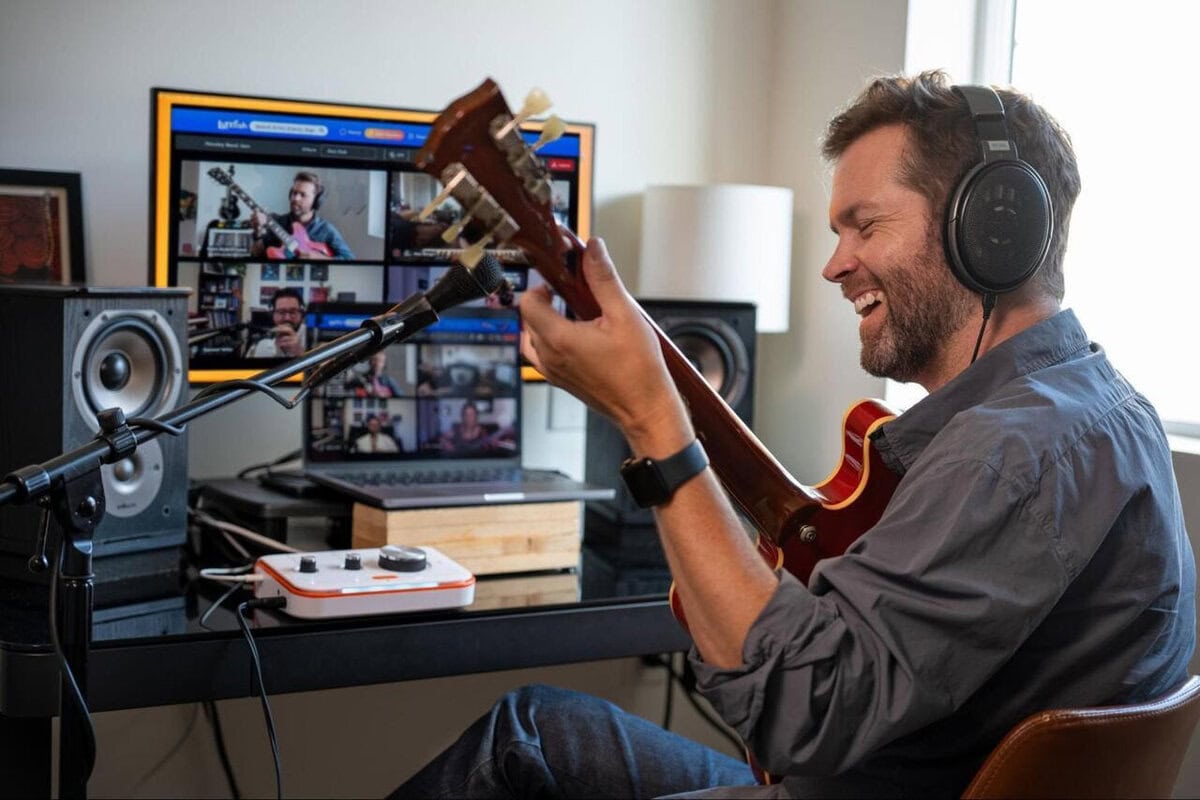
Online music collaboration platform Lutefish has announced a series of updates designed to make remote jam sessions more flexible, interactive, and accessible to musicians.
Following its Open Jam launch, the platform is introducing support for larger collaborative sessions, new individual channel effects, and a referral program aimed at growing its community of musicians.
The updates reflect the growing importance of digital tools that enable creative collaboration regardless of physical location, allowing musicians to practice, experiment, and perform together without sharing the same room.
Bringing More Musicians Into the Jam
One of the most significant updates is an expansion of Lutefish’s session capacity from five to six participants.
While adding a single participant might seem like a relatively small change, the increased capacity creates additional opportunities for musicians to collaborate in larger groups.
For bands, informal jam groups, and musicians looking to connect with new collaborators, the ability to accommodate six participants in a single session provides greater flexibility.
Remote music collaboration presents unique challenges compared with conventional video conferencing, particularly when it comes to coordinating performances and maintaining an engaging shared experience.
Lutefish is positioning its platform around the needs of musicians who want to play together rather than simply communicate online.
Greater Control With Individual Channel Effects
Alongside the expanded session capacity, Lutefish has introduced individual channel effects that give musicians greater control over their sound during collaborative sessions.
The new features include reverb and filters, allowing participants to customize their audio and experiment with different sounds without interrupting the flow of a jam.
This additional flexibility could be particularly useful for musicians exploring new arrangements, developing original compositions, or adapting their sound to different musical styles.
Rather than requiring every participant to use identical audio settings, individual effects allow musicians to shape their contributions to the overall performance.
The update reflects a broader trend toward making online creative platforms more customizable and responsive to individual users.
Building a Community Around Music Collaboration
Beyond the technical enhancements, Lutefish is introducing a referral program designed to encourage existing members to invite other musicians to the platform.
Under the new program, existing users who successfully refer a friend can receive two months of free access, while the invited musician receives a unique $50 coupon code.
The initiative is intended to support community growth while rewarding musicians who introduce new participants to the platform.
For a service built around collaboration, expanding the number of musicians available to connect with is an important part of the overall experience.
A larger community can potentially create more opportunities for musicians to discover collaborators, explore different genres, and participate in sessions with people they might otherwise never meet.
Making Music Together, Wherever Musicians Are
The latest enhancements are part of Lutefish’s ongoing efforts to improve the remote jamming experience through community feedback.
Bryan Wilkins, Marketing & Business Development Manager at Lutefish, explains:
“Lutefish is about enabling musicians to practice their passion together, wherever they are. These new features let our members find their signature sound and make it easier than ever to include more people in the experience.”
The company’s emphasis on accessibility and collaboration reflects a wider shift in how digital technology is influencing creative activities.
While remote working and virtual meetings have become commonplace, collaborative music-making introduces additional considerations, including audio quality, timing, and the ability to maintain a natural creative exchange.
Platforms such as Lutefish are exploring ways to make these experiences more practical and enjoyable for musicians who may be separated by geography but connected through shared musical interests.
The Future of Remote Music Collaboration
The expansion of Lutefish’s platform highlights how online collaboration tools are continuing to evolve beyond conventional workplace applications.
For musicians, digital platforms can provide opportunities to maintain creative relationships, discover new collaborators, and experiment with different approaches to making music.
Although the latest updates focus on relatively straightforward improvements, including larger sessions and greater audio customization, they contribute to the broader goal of making collaborative music experiences more accessible.
As Lutefish continues developing its platform in response to community feedback, its latest enhancements offer musicians additional ways to connect, experiment, and create together.
More information about the platform and its latest features is available through the official Lutefish website.