
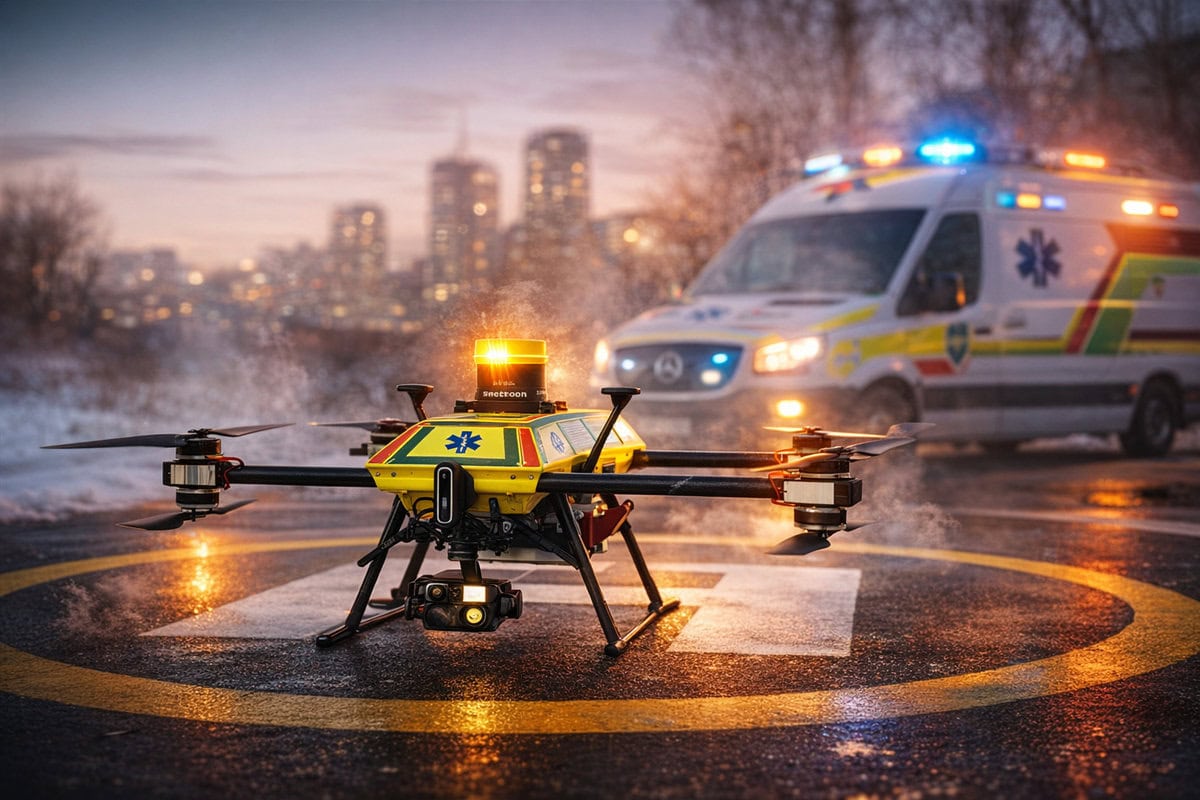
Everdrone secures new funding to expand its life-saving drone services, marking a shift from pilot programs to commercial deployment across Europe.
Autonomous drones are moving from experimental trials into real-world emergency healthcare systems—reducing response times when every second matters.
From Pilot to Commercial Deployment
Swedish drone technology company Everdrone has raised SEK 36 million in a new funding round, signaling its transition into a commercial phase for emergency healthcare services.
The investment, led by Sciety, will support further development of Everdrone’s platform and enable expansion into additional European markets.
CEO Mats Sällström says the funding strengthens the company’s ability to scale:
“This funding gives us stronger conditions to continue building the company and expanding our services into more markets across Europe.”
Drones in the Emergency Chain
Everdrone is already operating what is believed to be the world’s first drone service integrated into an emergency response chain for cardiac arrest.
Its autonomous drones are dispatched in parallel with ambulances, delivering critical equipment—such as defibrillators—directly to the scene.
This approach addresses one of the most critical challenges in emergency care:
👉 Response time
By delivering life-saving equipment before paramedics arrive, the system has the potential to significantly improve survival outcomes.
A Proven Model Gaining Traction
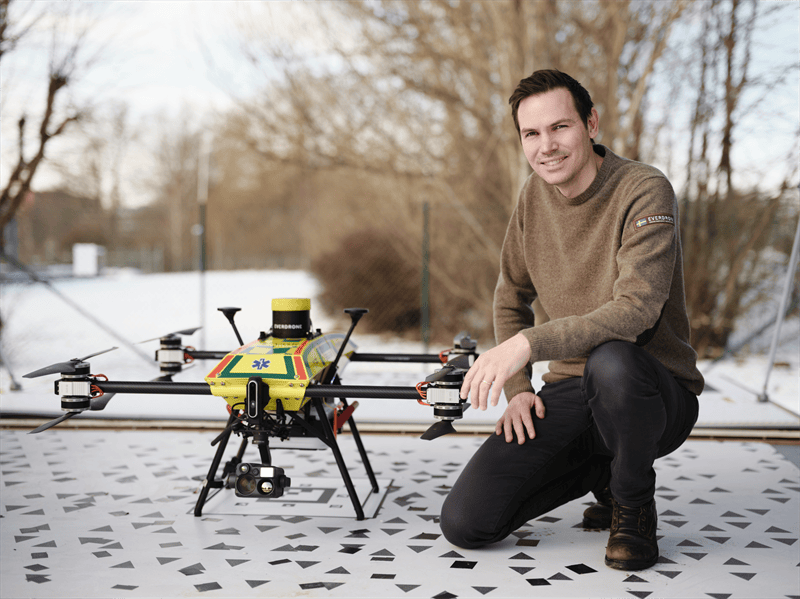
Unlike many emerging technologies, Everdrone’s system is not theoretical—it is already operational.
-
Active service in Västra Götaland Region (Sweden)
-
Procured by Region Stockholm
-
Expanded into Normandy (France)
The company has also been conducting operational flights since 2020, working closely with healthcare providers to validate its model.
Why Demand Is Growing
Healthcare systems are increasingly exploring new ways to:
-
Reduce response times
-
Improve coverage in rural and urban areas
-
Optimize resource allocation
Drone-based delivery offers a compelling solution—particularly in time-critical scenarios such as cardiac arrest.
As Sällström notes:
“Interest in drone-based solutions in emergency healthcare is increasing as regions look for new ways to reduce response times.”
Beyond Defibrillators
While current deployments focus on delivering automated external defibrillators (AEDs), Everdrone is building a broader platform for emergency logistics.
Potential future use cases include:
-
Delivery of additional medical supplies
-
Real-time video support for dispatch teams
-
Integration with wider emergency services
This positions the company not just as a drone operator—but as a critical infrastructure provider in digital healthcare systems.
Investment Signals Confidence
The funding round was led by Sciety, a Nordic investment firm focused on life sciences and digital health.
Andreas Lindblom, Managing Partner at Sciety, highlights the strategic fit:
“Everdrone addresses a clear and well-documented need in emergency healthcare and has already established partnerships with several regions.”
Beyond capital, the partnership brings:
-
Industry expertise
-
Strategic networks
-
Increased visibility
—key factors for scaling across regulated healthcare markets.
A Broader Shift in Healthcare Innovation
Everdrone’s growth reflects a wider trend:
👉 The convergence of autonomous systems and healthcare delivery
As technology matures, solutions that were once experimental are becoming embedded into real-world infrastructure.
This includes:
-
AI-assisted diagnostics
-
Remote monitoring
-
Autonomous logistics (like drone delivery)
Together, these innovations are reshaping how healthcare systems operate under pressure.
Conclusion
Everdrone’s move into commercial deployment marks a significant milestone—not just for the company, but for the future of emergency response.
By integrating autonomous drones into healthcare systems, it is demonstrating how technology can directly impact outcomes in life-or-death situations.
As adoption expands across Europe, drone-based emergency response may soon become a standard part of modern healthcare infrastructure.