
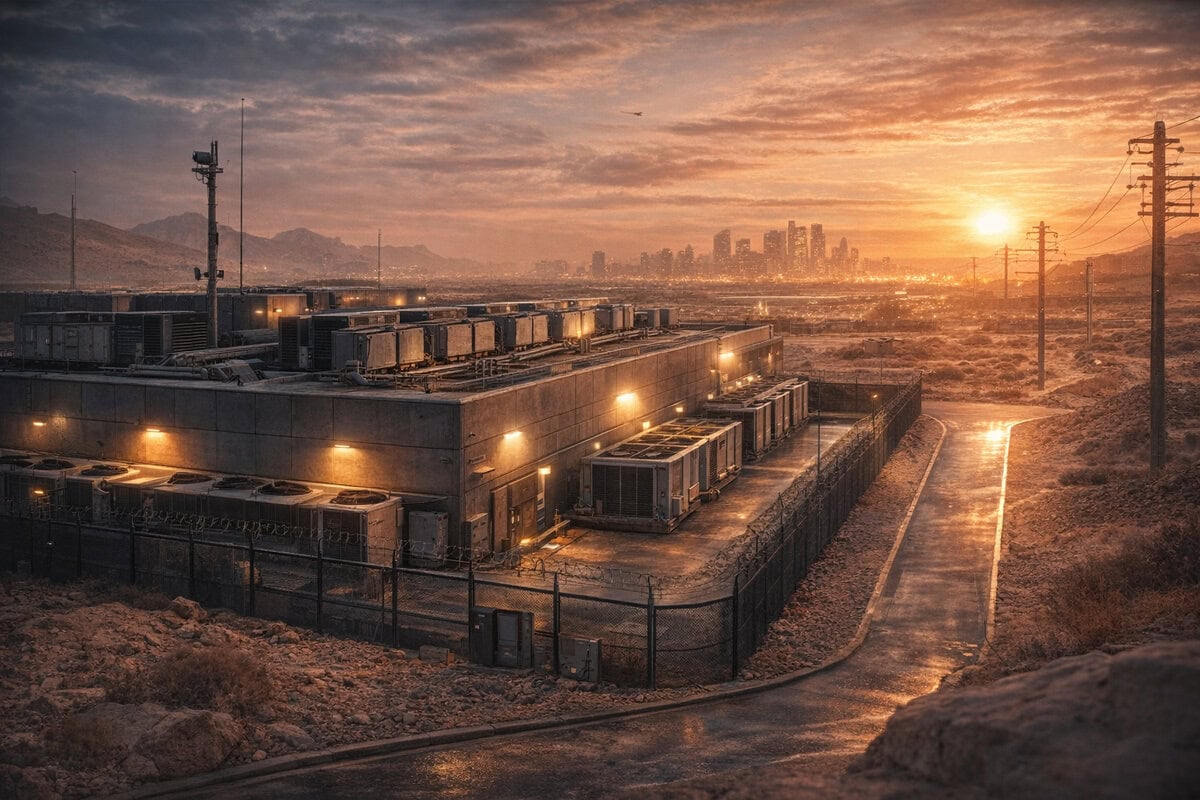
Geopolitical tensions in the Middle East are placing digital infrastructure under pressure—but early signals suggest the system is holding firm.
A new analysis shows that while isolated disruptions have occurred, the region’s data centre ecosystem remains stable, highlighting the growing importance of resilience-first infrastructure design.
A Live Stress Test for Digital Infrastructure
Rising tensions across the Middle East have brought renewed scrutiny to the resilience of critical digital systems.
According to a recent analysis from DC Byte, the situation is less a breakdown—and more a real-world stress test for modern infrastructure. In its latest report, Assessing the Impact of the Middle East Conflict on Data Centres, the firm outlines how the sector is responding under pressure.
Minimal Disruption, Strong Architecture
Out of 233 data centre developments across the GCC, only a small number have been directly affected.
Crucially:
-
Workloads have been successfully rerouted
-
Core services have remained largely uninterrupted
-
Infrastructure redundancy has performed as designed
This reflects a broader shift in infrastructure strategy—where resilience is built into systems from the outset, rather than added later.
Risk Is Reshaping Strategy
While the system has held up, the conflict is accelerating changes in how operators approach infrastructure design.
Key priorities now include:
-
Advanced physical risk modelling
-
Distributed and decentralised workloads
-
Multi-region redundancy frameworks
These approaches are rapidly moving from best practice to baseline expectation.
Supply Chains Still Matter
Beyond operational resilience, the report highlights emerging pressure points in logistics and connectivity.
Disruptions around the Strait of Hormuz are introducing:
-
Shipping delays
-
Routing constraints
-
Increased costs
These issues reinforce a critical insight:
Even the most advanced digital systems remain dependent on physical infrastructure and global supply chains.
Investment Momentum Remains Strong
Despite geopolitical uncertainty, investor confidence in the region appears largely unchanged.
The data shows:
-
2.4GW of qualified capacity
-
2GW+ in early-stage planning
-
No major investor withdrawals
This suggests that the market continues to be viewed as high-growth, with manageable risk exposure.
Infrastructure Meets Geopolitics
DC Byte CEO Bernard Johnson notes that the situation highlights a deeper trend:
The growing interaction between geopolitical risk and digital infrastructure.
In practical terms, this means data centres are no longer just technical assets—they are increasingly seen as strategic infrastructure.
The Bigger Picture
As demand for cloud computing, AI, and digital services continues to expand, resilience is becoming a defining factor in infrastructure investment.
The Middle East is now demonstrating that:
-
Modern architectures can withstand localized disruption
-
Redundancy is no longer optional
-
Infrastructure design must account for geopolitical uncertainty
Conclusion
So far, the region’s data centre ecosystem is proving resilient under pressure.
But the long-term impact may be even more significant:
-
Greater emphasis on distributed infrastructure
-
Increased investment in risk-aware design
-
A shift toward resilience as a competitive differentiator
In an increasingly unpredictable world, uptime is no longer just an engineering challenge—it’s a strategic one.