

Scams are becoming global industrial scale operations
Cybercrime is no longer just hackers sending phishing emails or small groups running online scams. According to new research from NordVPN’s Threat Intelligence team, cybercrime is becoming industrialized — with large-scale operations running fake stores, cryptocurrency scams, and malware campaigns across thousands of websites worldwide.
The report reveals three major global scam operations that demonstrate how cybercriminals are increasingly operating like technology companies, using automation, infrastructure, and large-scale systems to run fraud campaigns at scale.
Old software vulnerabilities creating new threats
One of the most surprising findings in the report is that attackers are still exploiting extremely old software vulnerabilities. In one campaign, cybercriminals exploited a 15-year-old vulnerability in an outdated web editor tool to compromise more than 1,300 websites, including government, corporate, and research domains.
These trusted websites were then used to redirect visitors to phishing pages, fake online stores, or malware downloads. Because the domains were legitimate, security systems were more likely to trust them, making the attacks far more effective.
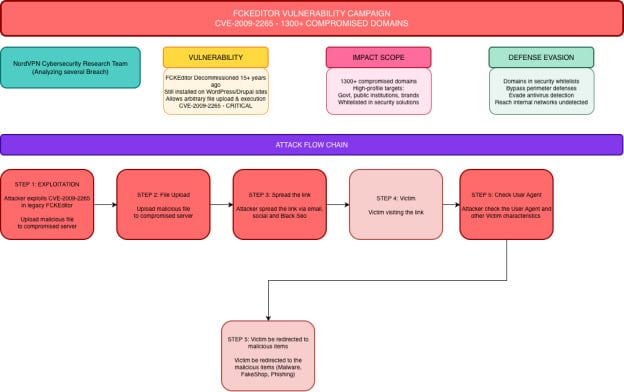
This strategy shows how cybercriminals are increasingly using legitimate infrastructure to run scams rather than building everything from scratch.
Cryptocurrency scams evolving into identity theft operations
The report also uncovered a large-scale cryptocurrency phishing network involving more than 100 fake crypto domains. The scam begins with emails claiming the recipient has received a large cryptocurrency deposit by mistake.
Victims are directed to fake cryptocurrency platforms where they are asked to log in and later pay so-called “gas fees” to withdraw the funds. In reality, the platforms are fake and the fees are stolen, while attackers also collect personal data for identity theft.
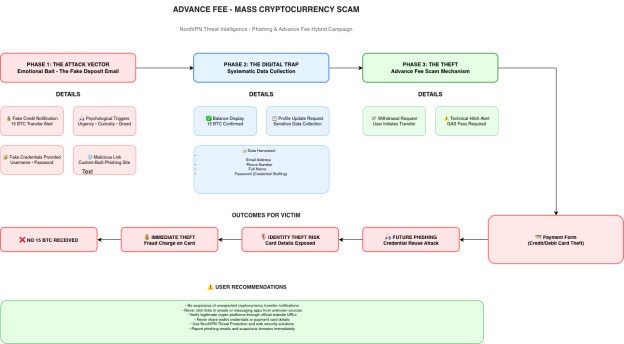
These scams combine phishing, identity theft, and cryptocurrency fraud into a single operation, making them particularly effective and difficult to detect.
Fake online stores run like businesses
Another operation uncovered in the investigation involved more than 800 fake e-commerce stores built using common website tools like WordPress and WooCommerce. These sites advertise products at extremely low prices to attract buyers, but customers either receive counterfeit goods or nothing at all.
Investigators found that many of these websites were connected to a centralized operation, showing how automation allows a single group to operate hundreds of fake stores at once.
Cybercrime is becoming an industry
The most important takeaway from the report is that cybercrime is increasingly being run like a business. Criminal groups are using automation, software platforms, data analytics, and large-scale infrastructure to run fraud operations efficiently.
Instead of isolated scams, we are now seeing:
- Scam networks
- Fraud platforms
- Automated phishing systems
- Fake e-commerce ecosystems
- Industrial-scale cybercrime operations
This shift means cybersecurity is no longer just about stopping individual hackers — it is about defending against organized digital industries built around fraud.
The future of cybersecurity
As cybercrime becomes more organized and automated, cybersecurity will increasingly rely on AI, automation, and threat intelligence to detect patterns and stop attacks before they reach users.
For individuals and businesses, the biggest risks continue to come from phishing, fake websites, outdated software, and online scams — all of which are becoming more sophisticated every year.