
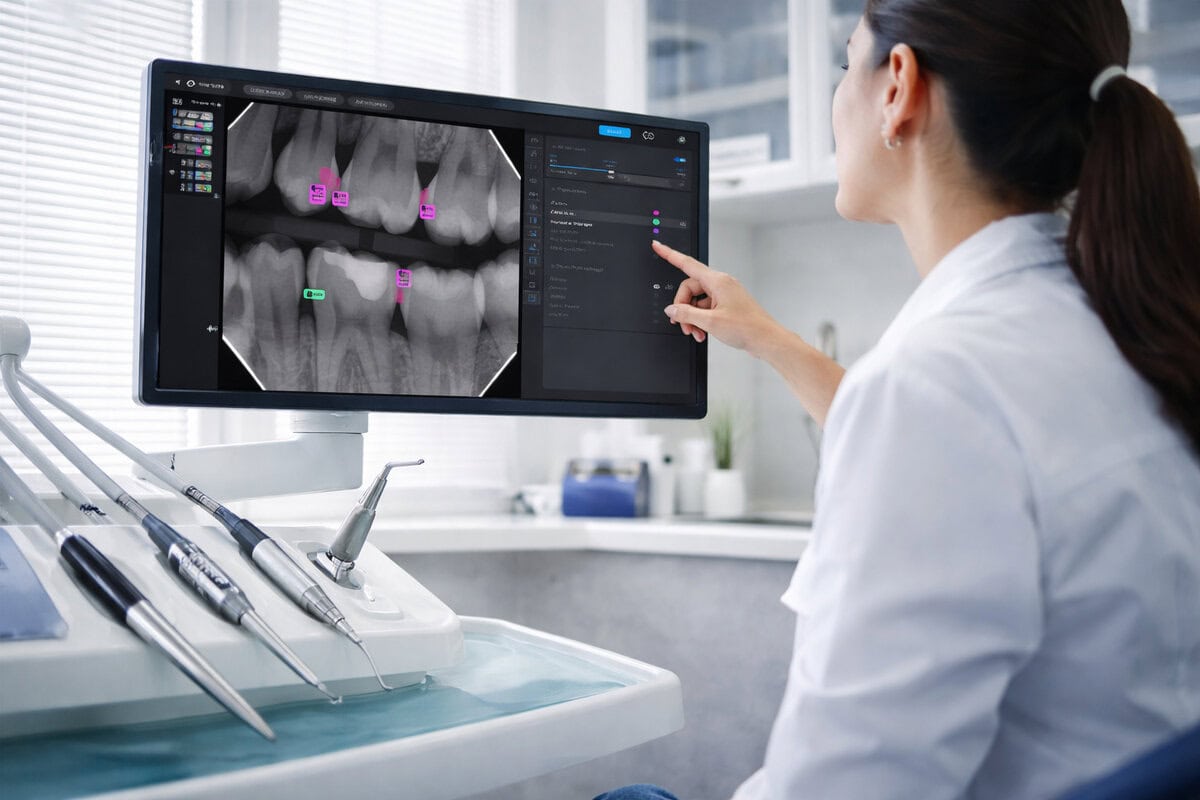
As patient expectations rise and regulatory pressure increases, dental practices are turning to artificial intelligence to improve diagnostic consistency, strengthen communication, and reduce operational risk.
AI imaging tools are helping dentists standardise diagnoses, improve patient understanding, and operate more efficiently under growing commercial and clinical pressures.
For decades, dentistry operated largely on trust. Patients relied on clinical judgement, and treatment decisions were typically accepted based on professional expertise alone.
That dynamic is now shifting.
Across the UK and beyond, dental practices are facing a more complex environment shaped by rising patient expectations, tighter margins, and increased scrutiny around clinical decision-making. In this context, artificial intelligence is emerging not as a disruptive novelty, but as a practical tool to support consistency, communication, and operational resilience.
A Shift in Expectations
The change is not driven by declining clinical standards, but by a transformation in how care is evaluated.
Patients increasingly expect to see clear evidence supporting diagnoses, while regulators require more robust documentation and consent processes. At the same time, staffing constraints and financial pressures are forcing practices to operate more efficiently.
Research continues to highlight a persistent communication gap. Studies suggest that many patients struggle to interpret dental radiographs, making it difficult to fully understand diagnoses based on imaging alone. In a system where private treatment often depends on patient confidence, this gap represents both a clinical and commercial challenge.
Visual communication is becoming central to addressing this issue. Evidence from healthcare research shows that patients are significantly more likely to understand and act on medical information when it is supported visually rather than explained verbally, as outlined in research published on PubMed.
AI as a “Second Opinion”
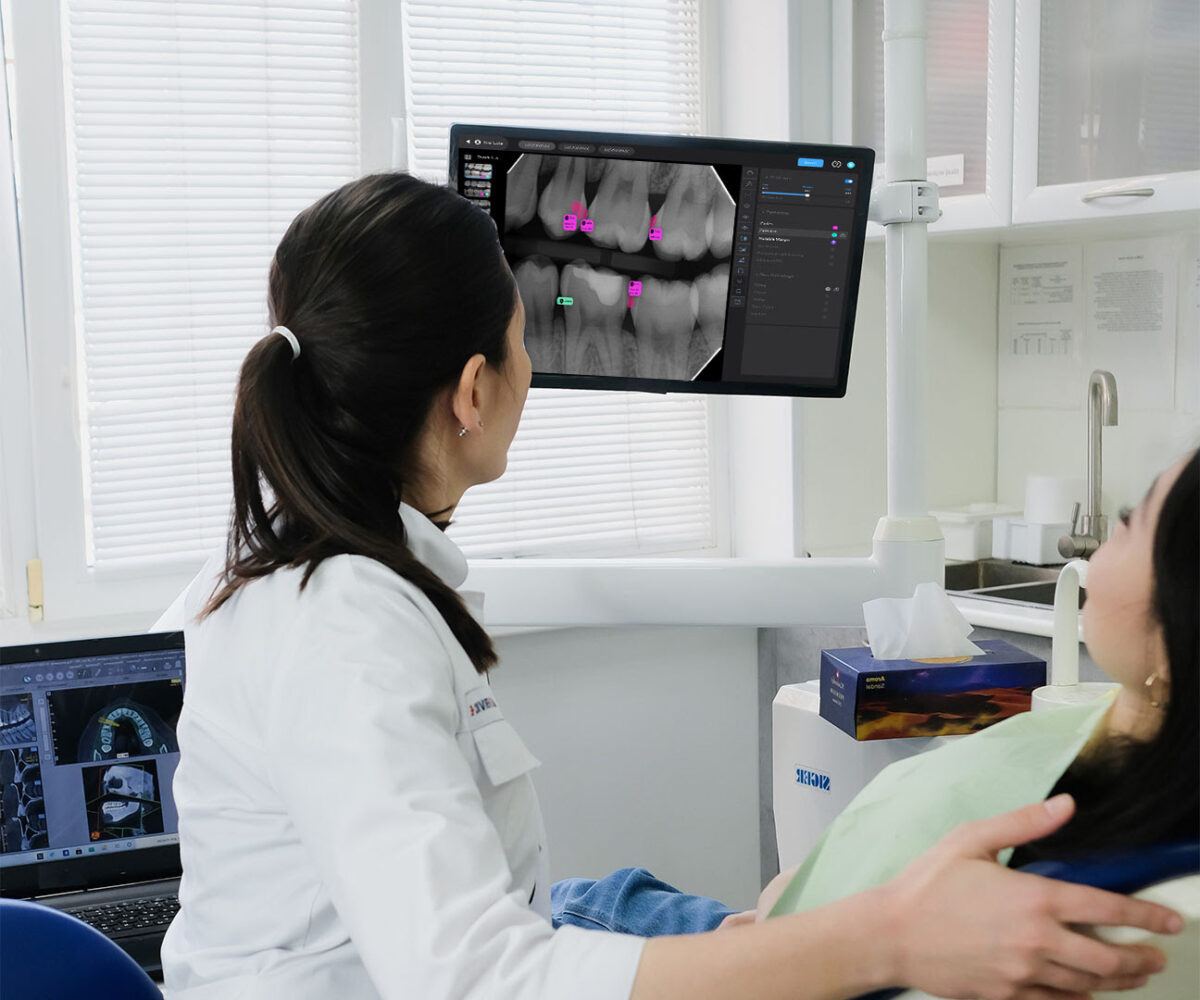
One of the technologies gaining traction in this space is AI-powered imaging software.
Platforms such as Hello Pearl use computer vision algorithms to analyse dental X-rays and 3D scans in real time, identifying and highlighting potential conditions including tooth decay, bone loss, and gum disease.
The system overlays annotated visual data onto traditional imaging, helping clinicians interpret results more quickly and communicate findings more clearly to patients.
Rather than replacing clinical judgement, these tools are increasingly positioned as a “second opinion” layer, supporting decision-making and improving diagnostic consistency across teams.
For multi-clinician practices, this consistency is particularly valuable. AI systems apply the same analytical criteria to every image, regardless of workload or time pressure, helping standardise how diagnoses are explained and understood.
Improving Communication and Trust
For many practice owners, the value of AI lies as much in communication as in analysis.
When patients can clearly see and understand potential issues through annotated imaging, they are more likely to feel confident in treatment recommendations. This is particularly important in cases where early-stage conditions may not yet present symptoms.
Clinicians using AI-supported imaging report that visual explanations can improve patient engagement, support informed consent, and reduce follow-up uncertainty after appointments.
In an environment where patients are more cost-conscious and selective about treatment decisions, transparency is increasingly becoming a commercial necessity as well as a clinical one.
Efficiency and Operational Pressure
Beyond communication, efficiency gains are becoming a key driver of adoption.
AI-assisted imaging can reduce the time required to review scans and support faster decision-making during consultations. It also helps standardise workflows across teams, reducing variation in how cases are assessed and discussed.
Annotated images can be shared with patients after appointments, enabling them to review findings at their own pace and supporting more informed decision-making.
In high-demand practices, these improvements can help reduce cognitive load on clinicians while maintaining consistent standards of care.
Documentation and Risk Management
As litigation risk rises across healthcare, documentation is becoming increasingly important.
AI-supported systems create a digital audit trail, recording when findings were identified and how they were presented. This can strengthen documentation quality and provide additional support for informed consent processes.
For practice owners, this added layer of evidence can help reduce risk while improving governance standards.
From Innovation to Infrastructure
Early discussions around AI in healthcare often focused on disruption. In practice, adoption is taking a more pragmatic form.
Rather than replacing clinicians, AI is being integrated as a support layer that enhances consistency, clarity, and efficiency.
As independent research continues to demonstrate strong diagnostic performance across imaging modalities, AI tools are increasingly moving from experimental use into everyday clinical workflows. For example, a 2025 meta-analysis published in PLOS ONE found strong diagnostic accuracy for AI systems in detecting dental conditions across multiple imaging types.
For many dental practices, the shift is not about adopting new technology for its own sake, but about building systems that support sustainable performance in a more demanding operating environment.