
Exploring Britain’s search for better sleep
Sharing a bed is generally considered one of the defining features of being in a relationship, but anyone who has spent a sleepless night listening to their partner snore might occasionally question the wisdom of that arrangement. From conflicting temperature preferences to restless sleepers and incompatible schedules, the traditional shared bed isn’t always conducive to a good night’s rest.
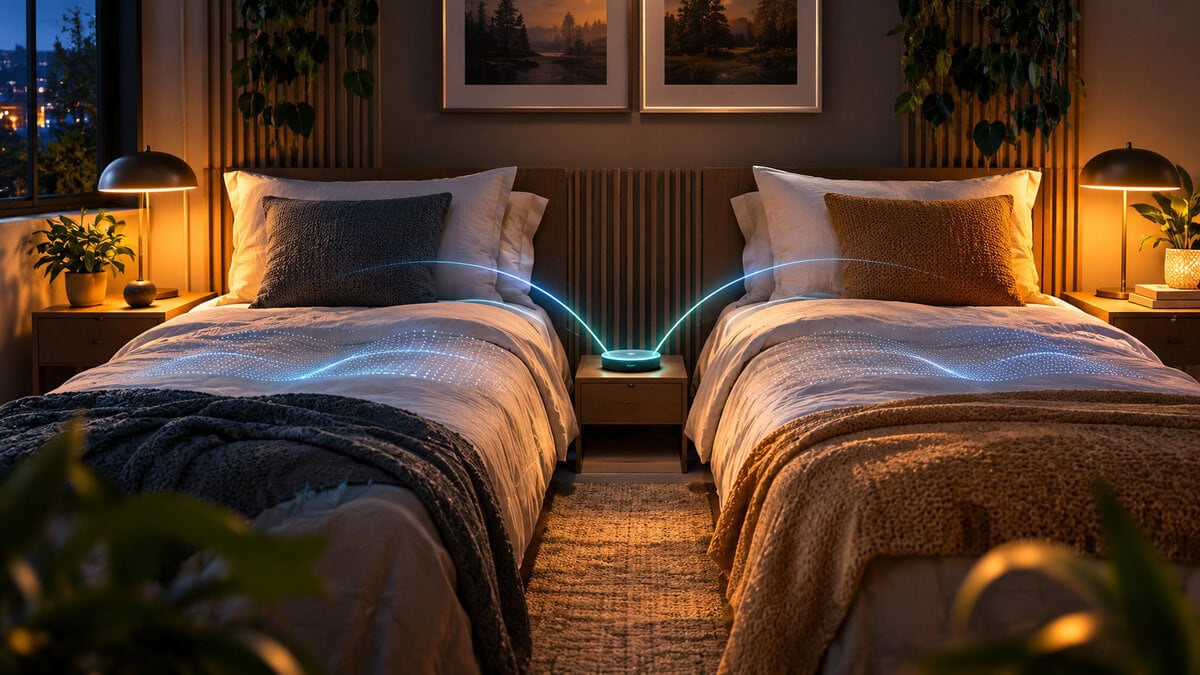
Perhaps that’s why the concept of ‘sleep divorce’ has attracted so much attention. Despite its rather alarming name, the practice simply involves couples choosing to sleep in separate beds or bedrooms, often in the hope of improving their sleep without compromising their relationship.
New research from UK bed and mattress retailer Bedstar offers an interesting glimpse into how people across Britain are exploring these alternatives, revealing significant regional differences in searches for everything from separate duvets to entirely separate bedrooms.
Exploring Britain’s Sleep Divide
Manchester tops the rankings, recording 103.1 searches per 100,000 residents for sleep-related separation solutions, followed by Bristol at 93, Leeds at 85.5 and Plymouth at 83.3. Glasgow completes the top five with 74 searches per 100,000 residents.
London presents a particularly interesting contrast. Although the capital generated 4,510 searches, more than any other city, it ranked just 12th when adjusted for population, at 49.7 searches per 100,000 residents. Nottingham occupied the bottom of the table with 24.1, less than a quarter of Manchester’s figure.
John Stalker, Managing Director at Bedstar, suggests that practical considerations such as living space might influence these differences. In cities where spare bedrooms are a luxury, sleeping separately may simply be less realistic, regardless of how disruptive sharing a bed becomes.
However, the figures don’t establish whether people are actually adopting different sleeping arrangements, or even whether they are experiencing greater sleep difficulties. The study analysed Google Keyword Planner search volumes across 20 UK cities, covering ten terms including ‘sleep divorce’, ‘separate duvets’, ‘Scandinavian sleep method’ and ‘earplugs for snoring’.
What the results do suggest is that people are actively investigating different ways to make their sleeping environments more comfortable.
Finding Alternatives to Separate Bedrooms
One particularly interesting aspect of the research is the range of solutions being explored. At one end of the spectrum is the Scandinavian sleep method, which involves couples sharing a bed but using separate duvets. It’s a relatively simple adjustment that can help accommodate different temperature preferences and reduce disturbances caused by one partner monopolising the covers.
Other approaches include twin beds, zip-and-link mattresses and, ultimately, separate bedrooms. But these options aren’t necessarily practical for everyone, particularly in smaller homes where space is limited.
Technology is increasingly offering alternatives for couples who would prefer to continue sharing a bed.
Smart mattresses, temperature-regulating bedding and sleep-monitoring devices are part of a growing category of products designed to accommodate individual preferences rather than assuming that one sleeping environment suits everyone.
Snoring, in particular, has become a focus for manufacturers developing intelligent sleep solutions. We recently explored this in our review of the NoctIQ Smart Anti-Snore Pillow, which uses integrated sensors to detect snoring and automatically makes subtle adjustments to the sleeper’s head position.
During our hands-on testing, the pillow’s companion app recorded encouraging reductions in snoring compared with the initial baseline, while the adjustments themselves were barely noticeable. Although individual experiences will vary, products like NoctIQ demonstrate how relatively sophisticated technology is being applied to an everyday problem that can have a significant impact on relationships.
Of course, persistent snoring can sometimes indicate an underlying medical condition, including obstructive sleep apnoea. As we explored in our earlier feature, Understanding the Rise of Sleep Apnea, the condition is more widespread than many people realise, and connected health monitoring technologies are increasingly being investigated as tools for identifying potential problems. Consumer sleep devices should never be regarded as substitutes for appropriate medical assessment.
Personalising the Sleeping Experience
Perhaps the broader significance of the sleep divorce conversation lies in how it challenges long-established assumptions about shared sleeping arrangements.
For generations, couples have been expected to share not just a bedroom but essentially the same sleeping environment, regardless of individual preferences. Yet sleep is an intensely personal experience, influenced by everything from temperature and noise sensitivity to working patterns and physical health.
The growing variety of sleep-related products reflects a wider movement towards personalisation in consumer technology. Just as fitness devices and health applications increasingly tailor their recommendations to individual users, sleep technology is beginning to recognise that different people require different conditions to rest comfortably.
This interest in using technology to improve rest and relaxation isn’t entirely new. Our earlier coverage of the Sensate II wearable explored how low-frequency vibrations and audio could be used in a device designed to encourage relaxation, illustrating another approach to addressing factors that can interfere with sleep.
The Bedstar findings offer a snapshot of that interest rather than evidence of a definitive behavioural shift. Search activity doesn’t tell us how many couples are actually sleeping separately, nor does it establish whether interest in sleep divorce is increasing over time.
Nevertheless, the diversity of solutions being investigated suggests that the conventional shared bed is no longer necessarily regarded as the only acceptable arrangement.
Whether the answer involves a second duvet, an intelligent pillow or an entirely separate bedroom, the underlying objective remains the same: finding a way for both partners to enjoy a better night’s sleep.
And perhaps that’s the most interesting development of all. Rather than treating separate sleeping arrangements as a relationship problem, we might increasingly come to see them as another example of how thoughtful design, technology and a little flexibility can improve everyday life.